Showing posts with label student stories. Show all posts

Tuesday, November 12, 2013

National Distance Learning Week: Post Your Online Learning Success Story


In honor of National Distance Learning Week, the ELife Blog Staff would like to invite you to share your online learning success story.  Has ELI online learning enabled you to complete your academic and/or career goals?  Have you had an instructor that was particularly motivating and inspiring?  Did you develop new skills to promote your success?  Post your online success story in a comment to this blog.   

For additional ELife events celebrating National Distance Learning Week, to include a ‘Google Hangout’ this Thursday at 7pm, please click here and  explore our ELife Event Calendar. 

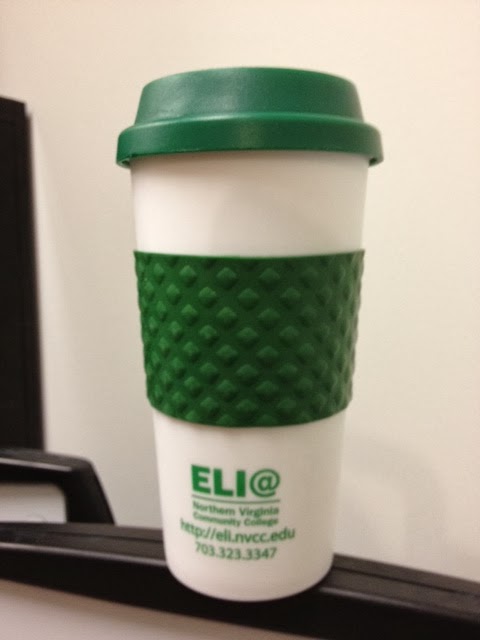
Students that post their success story will receive an ELI travel mug!  If you commented with a short statement of your success, please email elisuccess@nvcc.edu and provide your student ID, name and current mailing address – the travel mug will be mailed to you.   

We look forward to reading your success posts! 

To learn more about National Distance Learning Week, please click here.


Monday, July 8, 2013

Guest Post: "My Summer 2013"

We would like to thank ELI student, Betty, for her blog submission.  Betty shares her ELI story along with sensational tips to get organized and be prepared in the online classroom:

I am 46 years old and work full time.  I also have a home, 3 daughters, 3 horses and a new husband.  I wanted to go back to school for over 10 years but life and finances kept getting in the way.  Right before my birthday in May, I checked my little savings account balance and decided the time was now so I signed up for 3 online classes the first day of the summer session.  I have since signed up for 2 more summer classes and am also enrolled for fall 2013. 
My goal is to complete my Associates by spring 2015 and transfer to a four year school.  I have many reasons for getting a degree but first and foremost is for myself.  I also hope to set a good example for my daughters and be eligible for a better position at work.
My family is very supportive of my decision but it has been an adjustment.  Mom is now in the other room doing homework some evenings or reading a textbook.  I have always been a person who keeps a schedule and now it is even more important.  I work ahead in all my classes because I know there will be a time when a sick child, work project or unexpected work travel will happen and I do not want to be late for my school assignments. 
My tip is have a master schedule (my kids call my big binder my life).  I have work, school and family schedules all in one place and that helps keep me straight, on time and my kids where they need to be.  I even have bill due dates written in on this schedule.  It is the old fashioned paper schedule.  I do put things on my outlook for work and my iphone for home, but those are just reminders.  This system may not work for everyone, but find what works for you and stick to it.
I am no different than many adults going back to school.  I know many people have much crazier lives than I do.  I encourage anyone thinking about college to give it a try.  The best time is now; chances are your life isn’t going to get less hectic or complicated.
ELife Blog encourages student involvement.  We are honored to post your blog submissions sharing your ELI story, success stories and success tips.  For consideration, please submit your blog to ELISuccess@nvcc.edu

Thursday, May 30, 2013

School & Life

As the summer semester nears just around corner, we, as students, must now incorporate our daily responsibilities with the addition of the demanding attention that comes with our academics regimes. Outside bettering our future with education today, there is a different variety of individuals who attend college, online or over the internet.  Each of these individuals has their own set of routines, responsibilities, lifestyles, and different reasons for why they choose to continue their studies. Now whatever those other variables may be, the end result we all share when it comes to attending college is to learn new material, pass our courses, and be successful.  Now, that may sound good on paper, but put in practice, you have things under control, until eventually you become overwhelmed and lose focus. Personally, I work extremely early mornings 5 days a week for the receiving department of a company, typically from 3 am to 11 am.  I can’t drive so I rely on my mother, father, friend, girlfriend, or a family friend to pick me for work.  When I get home, after work, I do a number of household chores.  In high-sight, it looks like a really agonizing life, but, day in and day out, I tell myself that that this process is only temporary; it is a phase of my life. I enjoy helping my family and take pride in doing things to help them so that they can relax after having a stressful day.  Seeing them happy, even slightly over something as silly as having the dishes put away, really makes a difference.
Perhaps you’re not in this situation at all. But maybe you can relate to this or see some insight into my story because in the end, it is how you view every little thing in life that will give you a positive prospective. You have the decision to make things stressful, tiring, and boring.  In order to survive, you have to adapt and adjust. Whatever your student/life situation is, think about what’s most important, more important, somewhat important, and important.   You have to have a driving force, something that makes you want to successes and that you visualize – even during the hardest of tasks.  You need to prioritize the responsibilities you have in life.  It is with moderation that you need to also balance socializing, maintain a healthy lifestyle, and other activities.  By doing this, you will be able to maintain a balance between school and life.
Omid Najafpoor, Student Blogger

Friday, May 24, 2013

Survivial Tips for a New Semester as an Online Learner

If this is your first semester as an online learner, below are some tips to help you stay on top of things in your courses:

• Sign up for the Orientation Webinar for Distance Learners. You can find the webinar schedule on the main ELI homepage. The schedule will display a list of dates and times to register. This webinar offers a lot of valuable tips and skills for becoming an online learner and resources that will be useful to you as you progress through your online classes.

• Create more free time for yourself during the first week of class. Spend some time reviewing the syllabus and list of assignments. Begin recording assignments for the first week (or month) in a planner so that you are prepared for upcoming deadlines and long term assignments.

• Familiarize yourself with the writing format and style that is required in the syllabus. With this in mind, you will be a step ahead be remembering to revise your written assignments to accommodate the appropriate writing style. For example, if your essays need to be written using APA format, you will need to have an APA style guide on hand.

• Seek support from your peers, either via a list of your classmates’ e-mail addresses or seek out peer groups that can be found on our Virtual Student Union site. Use these resources as a way to connect and network; since much of your time will be spent at the computer, finding ways to network online is especially important; your peers may have online success tips to share. In addition, communicating with your classmates may help clarify course concepts in a new way.  By explaining them to each other in the form of study groups, you reinforce your learning and understanding of the material.

For assistance with academic resources or study strategies to include free online tutoring for ELI Students, please contact your ELI Success Coach at ELISuccess@nvcc.edu or call 703.764.5076.

For more information on this topic, visit this link.

Wednesday, May 15, 2013

Did you know that ELI also has a Facebook and Twitter account?  Follow-us, like-us, win prizes!  Once or twice a semester we have contests for students on our social media pages. 
Want to win a prize now?  Send a 200-300 word essay telling us your “NOVA story” and we will send you a box of ELI swag! 
Send your entries to ELISuccess@nvcc.edu by June 30, 2013. 
(Questions?  Feel free to email us)
https://www.facebook.com/NOVAelife
https://twitter.com/NOVAELIFE

Tuesday, December 11, 2012

Choosing a Career using the VA Wizard

I started my VCCS education years ago; back then, I had a very clear idea of what I wanted to do.  I wanted to become a dental hygienist, I was accepted into a dental hygiene program, but had to turn it down due to a family emergency.
Since then, my college career has been a nightmare; between changing schools, relocating, and curriculum changes, it has not been an easy path.  I am now in dire need of graduating because “my brain is fried”.
As a result of changing my major, I was required to enroll in SDV 100; a course geared towards helping students acclimate to the college environment.  In SDV 100, one of my assignments was to use the VA Wizard.  The VA Wizard is an application designed to help students find a career.  I completed the assessment and, in the end, I was not too impressed by feedback that I received.  According to the assessment I should possibly consider a career in interior design.  This is a skillset I enjoy however, I am choosing to defy the Wizard and go after a career in nursing.  Specifically, I want to become a scrub nurse who assists surgeons prior to surgery.  Being a mother, I am pursuing a career in the medical industry with hopes of making a decent living after graduating from college.
The VA Wizard is an interesting tool that can give someone ideas if they are clueless about what career path to pursue.  The Wizard is good at giving suggested career fields based on specific interests and areas of scholastic excellence.  In my case, the Virginia Wizard didn’t pinpoint my career of choice. However, I would recommend it to all students to see what recommendations it might have for you.

Danita Wiggins-Bader
NOVA Student

Wednesday, March 28, 2012

The Extended Learning Institute Changed My Life

The Extended Learning Institute changed my life. Hey you, stop that eye-rolling over there! It really has changed me. Let me tell you how.
I’ve been called a lot of things in my life, some good, others maybe not so much, but the last two years I have earned a few new nicknames that I am quite proud of. You may have heard some of these before; career switcher, adult learner, returning student. Well, soon you can add another name to that list: college graduate.
I graduated high school in 1992, when Pearl Jam and Nirvana dominated the airwaves and Bill Clinton was still the President. Yep, I know. I’m getting old. Since then, I have attended four colleges and changed majors at least three times. You might say I was “undecided.” Happily, I finally know what I want to be when I grow up, and in May, exactly one month before the 20th anniversary of my high school graduation, I will earn my first degree, Associate of Science.
Getting here hasn’t been easy. I searched for a long time to find a career that I would love, and I finally settled on becoming a nurse. But becoming a nurse is an uphill journey for someone like me. I may have taken a lot of college courses, but I hadn’t been in a science lab since high school and the only math course I have taken in the last 20 years was Math for the Liberal Arts…in 1999. Still, I took the plunge and enrolled at NOVA to start my journey towards nursing school.
The last two years have been more challenging, and more rewarding, than I could have imagined. When I started at NOVA I expected to take some easy courses at a community college, then move into the real work in nursing school two years later. Boy, was I wrong! Anatomy & Physiology, Chemistry, Microbiology, Statistics—these classes are no joke! What I thought would be easy turned out to be a full-time job.
I wanted the hands-on experiences of being in a lab, so I have taken most of my science courses on a NOVA campus. What I love about being on campus is getting to know my classmates—some of them born after I graduated from high school—and professors in person. I also appreciate the regular schedule, which keeps me accountable for staying on top of my coursework. But, for me, and many other “returning students,” taking full time classes in person is impossible with my schedule. So, taking classes online through the Extended Learning Institute (ELI) has been my learning mode of choice.
Now, this is where I get to the part where my life has changed. It sounds dramatic, but it’s true. My schedule is ridiculous at times, and fitting in regularly scheduled classes can be a real challenge. I have missed many on-campus classes because of a sick child at home or a business meeting that couldn’t be scheduled any other time. With ELI, I don’t have to worry about that. I can’t measure the value of being able to study on my own schedule. That being said, it isn’t easy, and it takes superior time management skills to stay on top of ELI schedules. That’s how ELI changed my life. I was never great at managing my time before. I had a very hard time figuring out how long something would realistically take me, and I am a procrastinator. With an online class, if you procrastinate you fall behind, and it can be very difficult to catch up. Now, I am a master at time management. I have to be! Well, at least when it comes to school. I might still be late if we ever meet for coffee, but I am working on that.
As my time at NOVA draws to a close, I am surprised to find that I am proud to have been a part of this community. I have been impressed with the quality of the instructors and the way the school has expanded to meet the needs of all the students who attend. I expected this to be a brief, inconsequential stop on my educational journey, and instead it has been a fantastic place to build the foundation for my future educational goals. I am proud to say I am an ELI student and I am graduating from Northern Virginia Community College. Nursing school, here I come!
Wednesday, August 17, 2011

My Experience with Caffeine-Fueled Procrastination


My name is Anders Bruce and I’m taking English 115 (Technical Writing) and English 256 (Literature of Science Fiction) through ELI. I am excited to be writing a three-part series of posts that will focus on time management – specifically, on mustering the energy and concentration to complete online coursework in a timely fashion, without relying on stressful, last-minute efforts that yield sloppy work.

Last year, my procrastination was at its worst. I was working thirty hours a week at a clothing store, including overnight floorset shifts, as well as attending NOVA full-time. The time was ripe for me to learn to manage my time effectively so that I could live up to all these different obligations, perhaps by building an hour of homework and studying into my daily schedule. Instead, I tended to vegetate with friends when I wasn’t working, for which I would compensate by consuming hundreds of milligrams of caffeine, in the form of coffee, tea, and energy drinks, whenever a deadline loomed.

The caffeine boosted my productivity at first, so that I was able to slap work together at the last moment, but I quickly developed a tolerance to the euphoric and focus-enhancing aspects of the drug – though not to its disruption of sleep. Most nights, I’d be up until about six in the morning and only be able to sleep until eleven o’clock or noon. I ended up dropping an online astronomy course I was taking, exactly 60% of the way through, because I had managed my time so poorly and because

I allowed myself to feel so overwhelmed.
In my next entries, I’ll dive beyond my own personal experience into some of the research into caffeine, other energy supplements, and procrastination, as well as explaining the role that physical exercise can play in sustainably maintaining focus and energy.

Wednesday, May 4, 2011

Summer Humdrum

Hello! My name is Shannon. I am a NOVA student currently working on earning my A.A.S. degree in Early Childhood Development. My goal is to earn my bachelor's degree in Elementary Education to become a teacher. I actually had always planned on doing Business Management but while in high school I got to be a volunteer in a local school for the summer. The opportunity was something I will always be grateful for because I realized business was not my calling. For this post, I'd like to share some opportunities that could be waiting for you this summer.

Work
By working and saving during the summer, by fall you can spend more time focused on school work instead of trying to work around your job schedule. If possible, try for a job related to your degree to get a better understanding of what you could be doing in your future.

Volunteer/Internship
Both are a great opportunity to meet people who share your interests and add experience to your proficiency. It also shows that you made a choice to spend your summer using your skills, intellect, and time to make a difference.

Academics
Enjoy - Students on financial aid do not get the chance to take classes they find appealing if it does not work towards their degree. If you can afford it, summer is a good time to sign up for a course that interests you.

Finish early - For those who would like to spend as little time as possible in school, summer courses are a good chance to get work done while there are less people and distractions around.

There is so much that can be done during summer. For more fun ideas, visit 10 Ways for College Students to Spend Summer.

Wednesday, April 13, 2011

S.M.A.R.T. Goals


Hello ELIfe Faithful! My name is Shaun. I am a NOVA student with plans to transfer to a four-year institution upon earning my A.S. in Social Science. This is my primary goal here at NOVA. So that I maintain a course to achieve this objective, I have adopted a goal setting strategy using the acronym S.M.A.R.T. These five letters represent aspects of goal setting that clearly identify and define the initiatives you create and hope to accomplish. They are as follows:

Specific - A specified goal has a greater chance of being accomplished rather than a general goal. To specify a goal, it helps to answer the six "W" questions:

1. Who? Who is involved?
2. What? What is it I want to accomplish?
3. Where? Identify a location.
4. When? Establish a time frame.
5. Which? Identify requirements and constraints.
6. Why? Specify reasons, purpose or benefits of accomplishing the goal.

Measurable - Establish concrete criteria for measuring progress toward the attainment of each goal you identify. When progress is measured, it is easier to identify the short-term goals achieved. To determine if a goal is measurable, ask these questions: How much? How many? How will I know when it is accomplished?

Attainable - When important, measurable goals have been identified, begin to plan means of making them come to fruition. Develop attitudes, abilities, skills, and the financial capacity to achieve them. Most goals are attainable with wisely planned steps and an established reasonable time frame within which to carry out these steps.

Realistic - To be defined as relevant and realistic, a goal must represent an objective toward which you are both willing and able to work. Make certain each step reached within a goal indicates measurable and significant progress. A means of determining how realistic a goal might be is to ask yourself if you have accomplished a similar goal previously or by asking what conditions would have to exist to accomplish this goal. Any goal is most likely realistic if you believe it can be accomplished.

Time-Bound - A goal should be grounded within a specific time frame. This contributes to the discipline and structure necessary to achieve any goal.

This comprehensive strategy has helped me remain on course to complete my degree and, ultimately, my goal here at NOVA. I hope it helps you too! Check out the Goal Setting Guide for more about S.M.A.R.T. goals.

Wednesday, February 2, 2011

ELI Tip #11: Proctored Exam Options


One of the main reasons I chose to take courses online at NOVA was because of the convenience, flexibility and affordability. I want to further my education, but I also have to work full time to take care of my family, and my job often requires me to travel. So online courses were the best solution. I could complete my coursework any time of day, from anywhere as long as I had enough time and self-discipline to do the work. Sign me up! But now the deadline for one of the required proctored exercises for my ELI course is approaching. Where will I find the time in my already hectic schedule to drive to a Testing Center? Plus, what would I do if I was out of town and could not get to a NOVA campus even if I had the time?

Who can't relate to this student? Well, fortunately ELI offers several options for taking proctored exams for  distance learning courses.

Although the Campus Testing Center is still the primary way most students take their proctored exams, as of Spring 2011, ELI now offers an online proctoring option for many courses. ProctorU will let you take exams for some courses online if you have a microphone and webcam for your computer. To see if this option is available for your course, log into Blackboard and under the Syllabus tab, look for EXAMS. If ProctorU is available, you will see instructions on how to use it that look similar to this.

ELI also offers two types of in-person proctoring--Campus Testing Centers and External Proctors. If you have any questions, call the ELI Hotline. Find contact details at ELI's website.

Related posts:

Tuesday, June 29, 2010

You Be The Counselor: Keeping Track of Time

My workweek has been busy, and I realize it has been several days since I logged into Blackboard. I remember with dismay that I needed to respond to three of my classmate’s posts by midnight, or I won’t receive credit. As I scan the discussion board, I feel overwhelmed by the number of posts I see. I decide that I am grateful I’m not the professor—It’s stressful just looking at all those unread posts, without having to carefully read every single one. For now though, I just have to respond to three. I scan the posts looking for one that would be interesting to reply to.

There are a couple of students who have recently completed their posts. Since no one has commented on them yet, I decide to start there. The first two posts are very brief and a little vague. In each of them, I point out a term that is not well defined or an idea that could use a little fleshing out, and ask the writer for some clarification. That was pretty quick—only one more post response to go. 


The next post is enjoyable to read. The writer makes a thorough argument backed up with details from a research study. I decide to challenge one of his conclusions. It takes me about 30 minutes to compose my response, and I have to look a full article that he referred to in his post using NOVA’s library website in order to make sure my own information is right. Now that I’ve put in this extra work, I realize that I want to see how my fellow student responds to what I wrote. Unfortunately, it’s the last day for responses to be posted for a grade, so he will probably not check back on these forums again. I feel disappointed at that thought. Since I learned a lot while writing that post, my time certainly wasn’t wasted, but it would definitely be much more rewarding to get an enjoyable discussion for my efforts. I decide that next week, I need to figure out a way to remember to log on sooner!
Are there any tools or strategies that you find useful to help you keep track of your schedule and upcoming assignments? What ideas do you have that might be helpful to this student?

Friday, May 14, 2010

You Be the Counselor: Getting Ready for the First Day of Class

My online Classes start on Monday. I’m feeling nervous and excited as I log into Blackboard to see if my classes are available yet. In the past, some of them have been posted as early as the Friday before the class starts. Earlier in the week, I had gone to the online bookstore and ordered my textbooks. They had just arrived today. I was hoping the syllabus for my courses would be posted already, so I could get started a little early. Since I know I’ll have to schedule my homework and tests around my work, getting a look at the deadlines for my assignments and tests is a big deal—it lets me rough in my expected schedule for the next month or two. Unfortunately, I see that none of my classes are listed yet. I get a bit worried, and check My NOVA to make sure I am properly enrolled in the classes. With relief, I see that they are still on my schedule, and my balance is paid, so everything should be in order. I look back at the Blackboard website—just in case something has changed in the last 5 minutes. Then I notice the Announcements:
ATTENTION
On May 15 the college will be upgrading from Blackboard 8 to Blackboard 9, and Blackboard will be down from 12:01 am on May 15 until no later than 11:59 pm on May 15.
I bet my classes won’t be available until Blackboard is back up. I take a deep breath, make myself relax, and prepare myself for another two days of patience. At least I can start looking over my textbooks…

Each of us has our own way of preparing for the start of a new semester. What are some of the things you do to prepare for the start of your online class? Is there anything you recommend new students do during the week before or first week of an online class?

Wednesday, May 5, 2010

You Be the Counselor: Coping with Final Exams

As I signed in to the testing center to take my psychology exam. I could feel my heart thumping heavily in my chest. Entering my name and emplid into the computer, I was aware that my hands felt damp and sweaty. Even though the air-conditioning was on, I felt very hot and knew my face was a flushed brick red. I was tired and edgy, and very worried that I wouldn’t be able to remember anything I had studied the last few days. I just knew I wasn’t going to do well on this test. At that thought, my teeth ground together and my jaw tensed. If I failed this exam, it was going to completely ruin my GPA. Then I wouldn’t be able to transfer to the school I wanted, and I would have wasted the money and time I had spent on this class. My husband would be really upset about that… My fear and anxiousness increased, and as I sat at the computer looking at the questions on the screen, my mind went blank. It wasn’t that I didn’t know the material—I had studied it thoroughly. But when I tried to remember the concepts, it seemed like the details I needed kept slipping just out of my mental grasp, teasing me with the sense that they were there, but tauntingly, just beyond my reach.
When taking a test, have you ever felt like this? If you have, you may have been experiencing Test Anxiety. Because test anxiety is a kind of performance anxiety, a little bit of it can actually be helpful to you—motivating you to study and prepare, giving you energy and excitement about the chance to show off what you know. Too much of that anxiety, however, can have the opposite effect—causing physical, hormonal, and mental changes in your body and your thinking that interfere with your ability to remember things or process information logically. Are there any strategies and techniques that you use to prepare for tests? What methods are effective for helping you manage anxiety?

Wednesday, May 27, 2009

Looking to Speed Up Your Degree Completion?

NOVA students come to college with a wide variety of skills, knowledge, and information. Often they want to know how to apply their life and work experience to earn college credits.

Check out what one of our students has done to accelerate her course completion.

Christie Pilkington is a current ELI student who recently completed her Small Business Management Certificate and has decided to continue with the Business Administration degree. One of the courses required for her program (and pretty much all programs at NOVA) is ENG 111. After finding out the course objectives, she decided that she would try a CLEP (College-Level Exam Program) test.

Christie purchased a CLEP study guide for English and prepared for her exam. Once she felt ready, she registered to take the exam at the Alexandria Campus Continuing Education Department, and for less than $150, she earned credit for ENG 111. Congrats, Christie!

CLEP exams are offered in many general education subjects (like history, foreign language, math, science, etc.), and study guides can be purchased from the CLEP website to help you prepare.

Learn more here about CLEP exam dates and times. Please contact a NOVA counselor to discuss CLEP exam options and transfer considerations. For those of you that have taken CLEP exams, please share your experiences with us.

We’ll share more ways to accelerate your degree at NOVA in future ELIfe postings!

Tuesday, May 19, 2009

Returning to School after 18 Years: Sound Familiar?

One of our ELI faculty shared a wonderful email from a student who wrote to thank this professor for providing a great academic experience in Spring 2009.

This student, an honors student in high school, attended a prestigious Virginia 4-year college and goofed off! She dropped out, got a job, and survived just fine. Years later, after working hard and raising a family, she decided to return to college. She chose the inexpensive route – NOVA - in order to complete her 2-year degree with affordable tuition. She discovered that she loved learning - anything and everything - this time around, and she was amazed at how well she did when academic success really mattered to her.

Can you identify with this student? We would love to hear your story, too.

Tuesday, April 28, 2009

Procrastination Contest: Entry #5

Here is the last of the top five entries in our contest for tips on fighting procrastination. I hope you agree that your fellow students have given you some very useful tips and great insights! This last entry is by ELI student Garrett McNamara (who is a blogger himself!). Once you read it, please vote in the poll on the right to select your favorite of the top five. (Don't forget to look again at all five before you vote!) The winner will receive a package of ELI goodies. And now, here's our last tip:

I find it hard to dedicate myself to something that I do not have to physically show up to often. In order to combat this, I place notes about due dates where I see them most, my Google calendar. Since I use this calendar and access it everywhere I go, it is incredibly useful. I keep notes about what week it is in the course's progression and when assignments and tests must be completed. If I need to email a teacher about something, I record it there. All of my courses are mapped out in this calendar. Since I am constantly online building websites, I check this calendar many times an hour. I would suggest keeping an organized system like this somewhere you would actually see it.

As a second tip, I highly recommend forwarding your NOVA email address to the address that you check most often. This way you are instantly notified about all new messages and don’t have to remember to check separate addresses.

Sunday, April 26, 2009

Procrastination Contest: Entry #4

Here's our fourth of the top five entries in the procrastination contest. This one is by ELI student David Christensen.

I have many, many tips to fight procrastination. But I cannot take credit for any of them; let me explain. This semester has been beyond challenging for me. The short of it is that I have had to drop my 5 credit math course because I had gotten so far behind in it (procrastination hard at work).

This semester's challenges have pushed me to take more serious account of my struggles with procrastination and face them head on. So I picked up Niel Fiore's The Now Habit. You must believe me when I say that this book is the answer. (If only I had picked it up before this semester.) It redefines procrastination, explains what pushes us to it and the ways in which we do it. It goes further and provides concrete advice and programs to counteract the detrimental habit.

I cannot stress enough just how eye-opening this book was. Before reading it, I felt like I lacked the proper tools, or perhaps vocabulary, to address this problem alone. I could barely understand what was taking place within me when faced with procrastination; until I read this book and it all fell into place. It was like discovering a truth that had laid just beyond my grasp, giving me hope like never before. I realize I sound overzealous in my description, but for anyone who has struggled like I have with procrastination, this book is a life changer; it warrants the excitement. That said, this book truly is for everyone. Everyone procrastinates something. Also, the book provides advice (not to mention insight) for those who seek to help someone else who struggles with procrastination. I would highly recommend this book to ALL ELI students! (Actually, I'd recommend it be required reading for NVCC's SDV classes.) My tip to fight procrastination: get the book.

Friday, April 24, 2009

Procrastination Contest: Entry #3

This is the third of our top five entries for the procrastination contest. This tip comes from ELI student Lisa Cotts.

My #1 tip to help avoid procrastination and stay focused is to daydream. When I don't feel like doing school work or I think something else needs to be done instead, I daydream for a few minutes about how happy I will feel when I receive my diploma with my husband, my kids, my family and friends all watching and cheering me on.

Knowing my kids are watching me is so powerful. So often they will do as you do and not what they are instructed. I know they are learning to value a good education by watching me, and they know that it must be important or their 40-year-old mother probably wouldn't be doing it. I am amused when they ask if I have class today, too, or if I have more homework than they do. I get to be my kids' role model every day, but there are very few chances I will ever have to show them something more important than dreaming big, chasing your dreams, and being willing to work hard to achieve them.

Almost everyone would rather be doing something other than school work, but how many opportunities are you going to have to get it done on time? Just one. The best advice one of my professors gave me recently is treat your class like a job, if you have addiction issues deal with them, put one foot in front of the other and keep moving. That advice, coupled with the dream we all probably have had at least once in our lifetime about sitting in class taking an exam that we have not even cracked a book for yet is enough to keep me on the straight and narrow. And by the way, in this dream, if you are still wearing clothes (even if they are your puppy p.j.'s) consider yourself lucky!

Wednesday, April 22, 2009

Procrastination Contest: Entry #2

Here's the second of our five top entries for the procrastination contest. This one is by ELI student Eric Yeroshefsky:

It’s hard to think of where you might be 10 years, 5 years, or even one week from now. All anyone knows for sure is what is happening in their life at that exact moment, and honestly, who wouldn’t rather spend their time with something other than homework assignments? Most people are very aware that they are procrastinating, but they rationalize with trite excuses: “I produce better work at the last minute,” “It’s easier for me to focus when I’m close the deadline,” “I’ll do it later.” But why do we make excuses for school work? We are obviously valuing our present greater than our future.

My number one tip for procrastination is to realize the reason you are studying and taking classes online, which is to achieve a future goal. We are too busy to take classes in person; we work, we have family, we have other responsibilities. But, we are unique students, in that we have taken control of our own future, and decided to better ourselves by taking the initiative to squeeze classes in to our already packed schedules and we are mature enough to understand we want more out of school than just grades; we want to truly learn. Clearly there is something lacking in our life and we desire to achieve something greater than what we currently have and to be better than we currently are.

I have graduated from a 4-year college, but I have decided to take some ELI classes to better prepare my chances of getting accepted in to Graduate School. You must constantly remind yourself of why you are taking ELI classes and this will surely stop your procrastination. Hang a note of your goal on your door, take a picture of the place you want to be and tell everyone you can about your aspirations. If you are constantly being reminded of tomorrow’s goal, it will be easy to understand why it is important to work hard today. By delaying your assignments, you’re ultimately justifying the delay of your future dreams.